
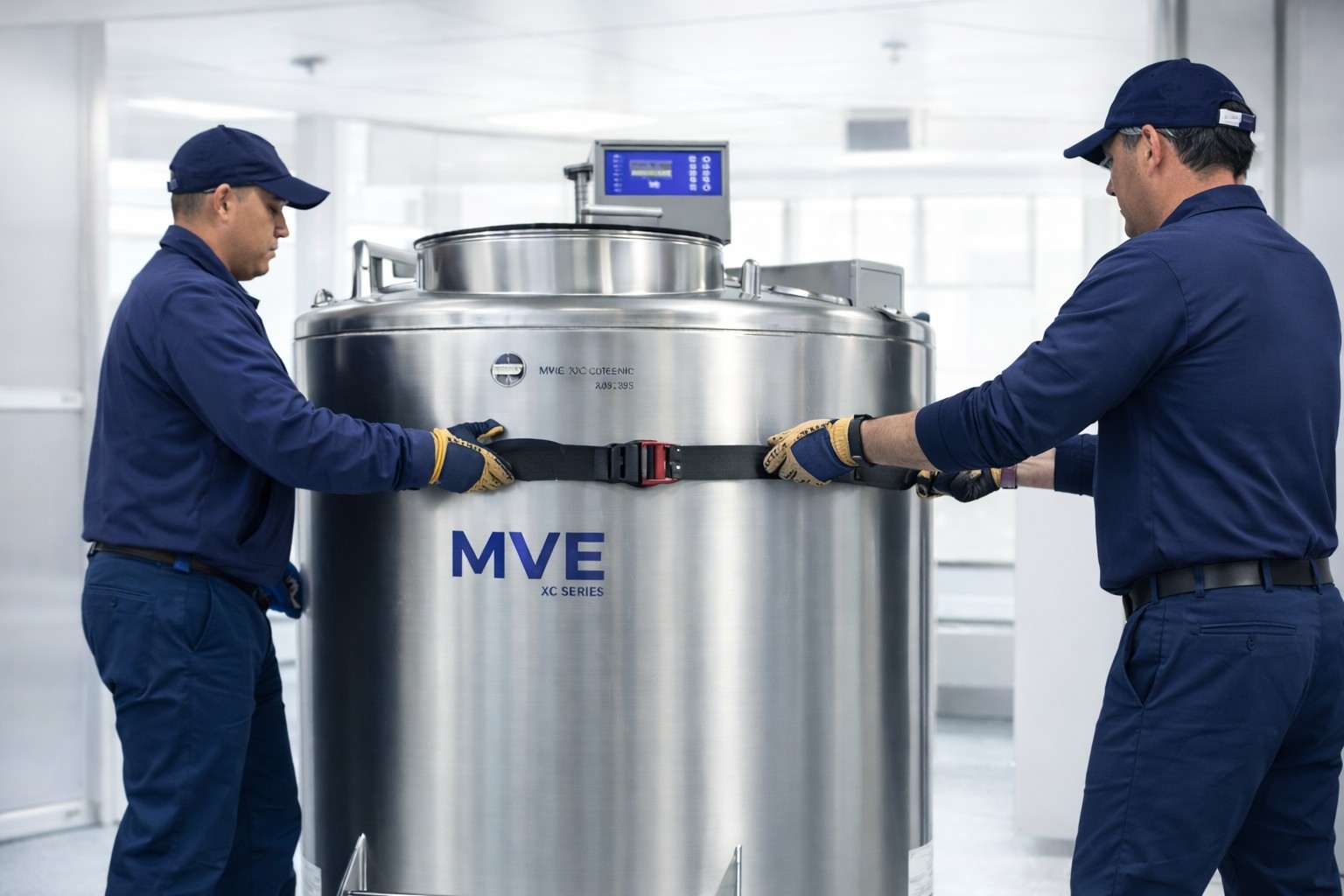
Moving a laboratory is about more than packing boxes and transporting lab equipment—it’s a delicate operation that, if mishandled, can have far-reaching consequences. A poorly planned lab relocation can disrupt critical research and manufacturing, cause costly damage or delays, and even compromise the integrity of ongoing experiments.
Ensuring a seamless move demands a strategic approach that accounts for every logistical, technical, and compliance-related detail.
Challenges of a Lab Relocation
Decommissioning and Recommissioning Equipment
Safely disconnecting, moving, and reconnecting specialized lab freezers and refrigerators requires thorough planning to protect the equipment and the irreplaceable material.
Ultra-low-temperature (ULT) and cryogenic freezers, and medical-grade refrigerators, often maintain temperatures between +4 °C and -196°C, making temperature stability a critical concern. Disconnecting these units requires specialized technicians who understand electrical and cooling systems. Trained technicians verify the compressors, sensors, and backup power sources to ensure they are prepared for transport.
Once at the new location, improper handling and installation can cause temperature fluctuations, leading to sample degradation or equipment failure. On-site, technicians must verify that power supplies and voltage requirements are compatible with the new facility’s infrastructure and that systems are carefully stabilized to maintain optimal performance.
Maintaining Environmental Controls During Equipment Moves
To ensure sample integrity, maintaining environmental conditions, such as temperature and humidity, is essential during the transportation of biological materials.
Tissue samples, blood products, and cell cultures are highly sensitive and can degrade with even minor temperature fluctuations. Climate-controlled transport with continuous monitoring is essential to protect material integrity and prevent loss of stored material, particularly for materials requiring refrigeration, ultra-low temperatures, or cryogenic storage.
Once at the new location, our technicians carefully move the lab’s temperature-sensitive assets or transfer the material to units preset at the required temperature and calibrated to meet the manufacturer’s specific requirements. For those stored in ULT freezers or LN2 dewars, backup systems and careful handling help avoid temperature fluctuations and maintain viability. Without proper controls, valuable materials can be compromised.
Navigating Regulatory Requirements
Transporting biological specimens involves more than just logistics—it requires strict adherence to regulatory standards that ensure sample integrity, safety, and compliance throughout the move.
Many laboratories handling biological materials must follow cGMP (current Good Manufacturing Practice), FDA guidelines, and applicable ISO standards—such as ISO 9001 for quality management. These regulations govern how specimens are packaged, labeled, stored, and tracked during transit to prevent contamination, loss, or degradation.
Proper documentation, including chain-of-custody records and temperature logs, is often required to demonstrate compliance. Specific permits or protocols may sometimes be necessary for handling human-derived samples, controlled substances, or investigational materials. Failure to meet these standards can result in regulatory violations or compromise the integrity of ongoing research and development.
Working with a relocation partner experienced in these requirements helps ensure that every aspect of the move aligns with industry standards—reducing risk and keeping critical projects on track.
Assessing Operating Costs and Funding
High operating costs in an existing lab—such as utilities, equipment maintenance, facility upkeep, and compliance requirements—can strain a lab’s budget and limit growth. When these expenses outweigh the benefits of staying in place, relocating the lab becomes a strategic decision to improve efficiency, reduce overhead, and support long-term research goals.
But moving a lab is far more complex and costly than a standard commercial relocation. Labs must budget for specialized movers, controlled-temperature transport, chain-of-custody protocols, hazardous-material handling, and the deinstallation and reinstallation of sensitive equipment. These costs add up quickly, and without proper planning, unexpected expenses can disrupt operations or jeopardize irreplaceable materials.
Minimize Lab Relocation Challenges
Communication and Coordination
Lab managers, facilities teams, and operations staff can significantly reduce relocation delays by keeping researchers and employees informed about timelines, expectations, and potential disruptions. Clear and consistent communication ensures everyone knows what to prepare for—whether that involves packing equipment, adjusting workflows, or coordinating ongoing experiments.
Sharing detailed scheduling information also allows staff to plan their work around the move, minimizing the risk of interrupting critical research and supporting a smoother transition.
Involving researchers and staff early in the planning process further enhances communication and reduces uncertainty. Open dialogue creates opportunities to gather feedback, address concerns, and identify special requirements—such as sensitive equipment needs or unique storage conditions. This collaborative approach reduces stress, prevents confusion, and helps maintain research continuity with minimal disruption throughout the relocation.
Budget for Relocation Costs
When setting aside a budget for lab relocation, it’s always better to overestimate than underestimate. Unexpected expenses, including infrastructure modifications, regulatory compliance, and downtime disruptions, can significantly increase the total cost of a lab move if not planned for in advance.
Early preparation helps labs avoid unexpected expenses and ensures a smoother relocation. When reviewing quotes, it’s essential to look for a detailed breakdown of all services—such as insurance coverage, setup, downtime, equipment calibration, and staff training—so nothing is overlooked. A clear and transparent estimate allows teams to anticipate actual project costs and budget confidently.
Developing a comprehensive financial plan that includes complete cost assessments and a reasonable contingency fund sets the stage for a successful move. This proactive approach minimizes surprises, prevents operational setbacks, and helps labs transition efficiently and on schedule.
Documentation and Audits
Detailed records must be kept for every stage of a lab’s move, including equipment inventories, hazardous material transfer logs, and chain-of-custody forms. Regulatory agencies often require proof that all safety protocols were followed, especially when relocating controlled substances or biological specimens. A comprehensive relocation log also helps laboratory managers optimize future moves and verify that all assets arrived intact and operational.
How GenVault Transport Services Can Help with Lab Relocations
With so much riding on a secure, efficient lab relocation, choosing the right transportation partner can make all the difference. GenVault Transport Services is a specialized moving company—our services are designed for laboratories that require the relocation of temperature-sensitive material and equipment. Whether handling chemicals, biological samples, high-value equipment, or other critical lab assets, we have years of experience relocating labs nationwide..
With the industry’s largest fleet of custom-built trucks, no lab relocation is too large or complex for GenVault. Combined with redundant power systems, 24/7 temperature monitoring, comprehensive cold chain management, backup at-temperature units, and reliable LN2 supply, it’s clear why laboratories nationwide choose GenVault Transport Services as their trusted lab move partner.
Do you have specific needs for an upcoming lab relocation project?
Contact GenVault Transport Services today, and we will work on a tailored solution that meets your lab’s unique requirements.